Control Entry Without Complicating The Day
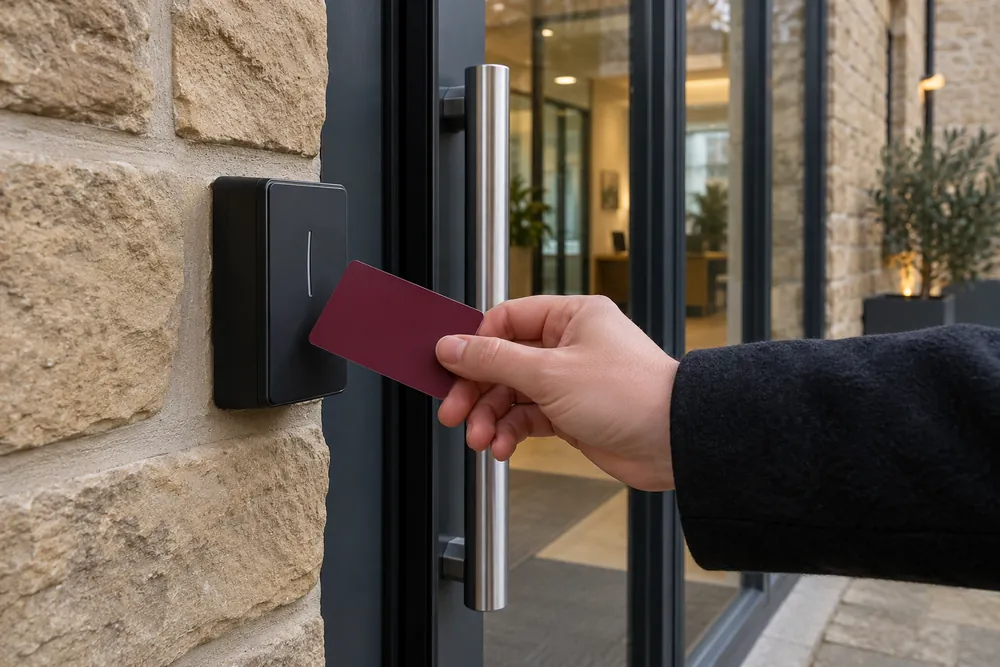
Access control systems replace some of the problems of shared keys with managed permissions. A card, fob or suitable mobile credential can allow entry to selected doors at selected times. If a credential is lost, an administrator can withdraw it rather than changing every lock that the person could open.
We plan access control for Bradford workplaces, managed buildings and shared entrances. The right arrangement depends on who uses each door, when access is allowed and how visitors are received. A single staff door needs a different management approach from a building occupied by several organisations.
Start by listing the groups that use the premises. Employees, cleaners, contractors and temporary visitors may need different schedules. The simplest useful system is one that the person responsible for the building can manage consistently.
Readers Are Only Part Of The System
A working system combines readers, controllers, credentials, locks, door furniture and power supplies. The physical condition of the door matters as much as the electronics. A warped leaf, weak frame or faulty closer can prevent an otherwise suitable lock from securing correctly.
A standalone door can be appropriate where permissions rarely change. A networked system may suit premises that need central administration or several doors. Cloud management can be useful, but licences, account ownership and the behaviour during a connection failure should be explained before purchase.
BS EN 60839-11-1 covers system and component requirements for electronic access control. The project specification should identify which requirements apply to the installation. We use the discussion about standards to clarify the design, rather than present standards names as badges of accreditation.
BSI: BS EN 60839-11-1 ↗Safe Escape Comes Before A Locked Door
Access control must be considered alongside the building fire risk assessment. Security on entry must not leave occupants unable to get out. Emergency release, the choice of locking device and any fire alarm interface need an agreed door-by-door design.
GOV.UK: Fire Safety In Offices And Shops ↗We ask who is responsible for the premises and whether door changes affect a fire door or escape route. A powered lock should not be added without checking the existing door arrangement. Relevant specialists may need to approve alterations before work starts.
The NSI guidance also highlights the need to think about accessibility, user groups and the wider door environment. A reader positioned conveniently for one person may be difficult for another to use. We discuss practical operation as well as security permissions.
NSI: Access Control Systems ↗From Door Survey To User Handover
First, the survey records the door construction, frame, closer, existing lock and cable options. We also review opening hours, visitor handling and any requirement to link with other systems. This is the point to identify permissions from landlords or building managers.
Next, the specification defines each access group and the intended behaviour of each door. Installation includes the agreed hardware, containment and controller setup. Testing should cover an authorised entry, a refused credential and the planned emergency release arrangements.
At handover, an authorised administrator should be shown how to add a user, cancel a lost fob and change an access schedule. Document who holds administrator access and where the configuration is backed up. An offboarding process is especially useful when contractors change frequently.
Costs, Credentials And Future Changes
The number and type of doors are major cost factors. Lock hardware, frame modifications, cable routes and fire alarm integration can affect the work more than the reader itself. The number of users matters when credentials or software have individual charges.
Ask whether licences are perpetual or subscription based, and what happens if you stop paying for cloud management. Future doors, replacement cards and remote administration should be discussed in the quote. A clear equipment schedule makes later comparisons easier.
For a reception or shared entrance, door entry systems let visitors request admission without giving them a permanent credential. Cameras can also provide a view of the entrance through a separate commercial CCTV system. Tell us which doors cause a problem and how people use them today.
Keep Access Permissions Manageable
Create an access list before installation rather than copying a set of old keys into electronic form. Name each user group and decide which doors it needs during an ordinary working day. Remove permissions that nobody can explain.
A designated administrator should review starters, leavers and temporary visitors through a consistent process. Decide who can authorise a new credential and how a lost one is reported. Keeping the rules straightforward makes it easier to spot a permission that has been left active after it is no longer needed.